
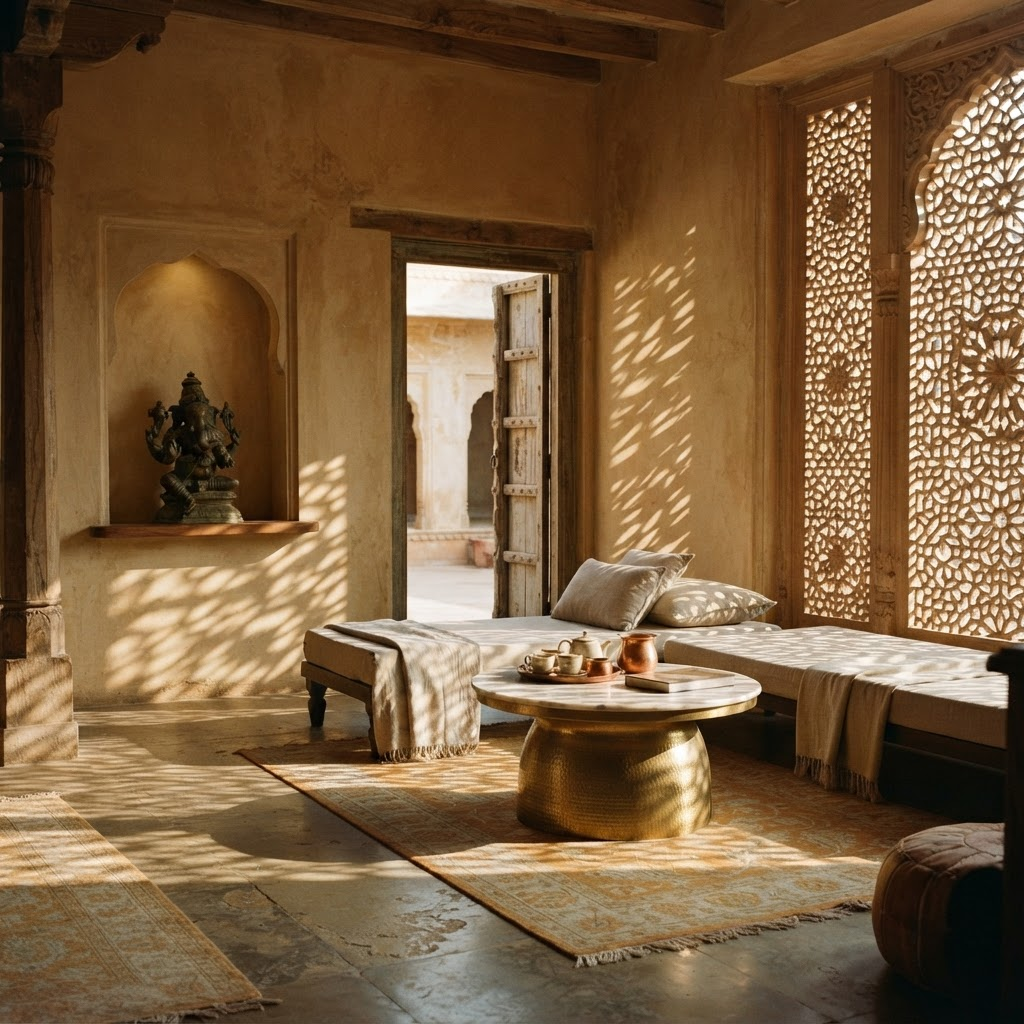
10 · Heritage
The Aravalli Estate
A nineteenth-century haveli in which every screen was recarved by hand, and every colour argued over for months.
- Location
- Jaipur, India
- Year
- 2023
- Area
- 1,480 m²
- Duration
- 30 months
The family had owned the property for six generations and wanted it habitable again without erasing what six generations had left behind.
We conserved rather than replaced, recarved eleven jali panels to original patterns, and introduced contemporary comfort only where it could be reversed.
- Heritage restoration
- Interior architecture
- Artisan coordination
- Furniture curation
- Ochre#B98A3F
- Saffron#C97B2C
- Sandstone#D8BB92
- Indigo#2E3A4F
- Dholpur sandstone
- Hand-carved jali, original patterns
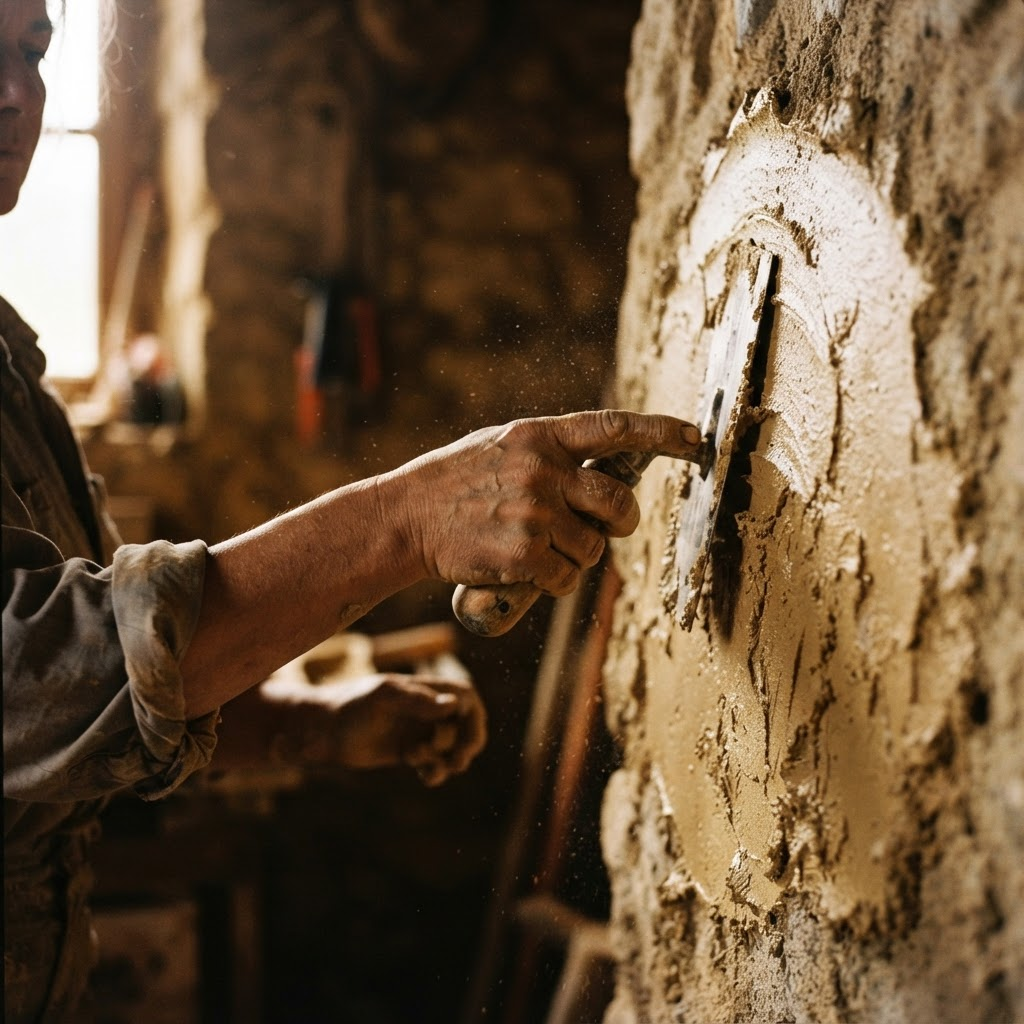
- Araish plaster
- Lime and marble dust, hand-polished
- Cast brass
- Lost-wax, Jaipur foundry
- Handwoven cotton
- Natural dyes, saffron and madder
Six generations of additions
The haveli had grown by accretion. Rather than impose a single date, we let the layers remain legible.
Shadow as ornament
The jali screens are the only decoration in the principal rooms. Everything else was kept plain so their shadows could perform.
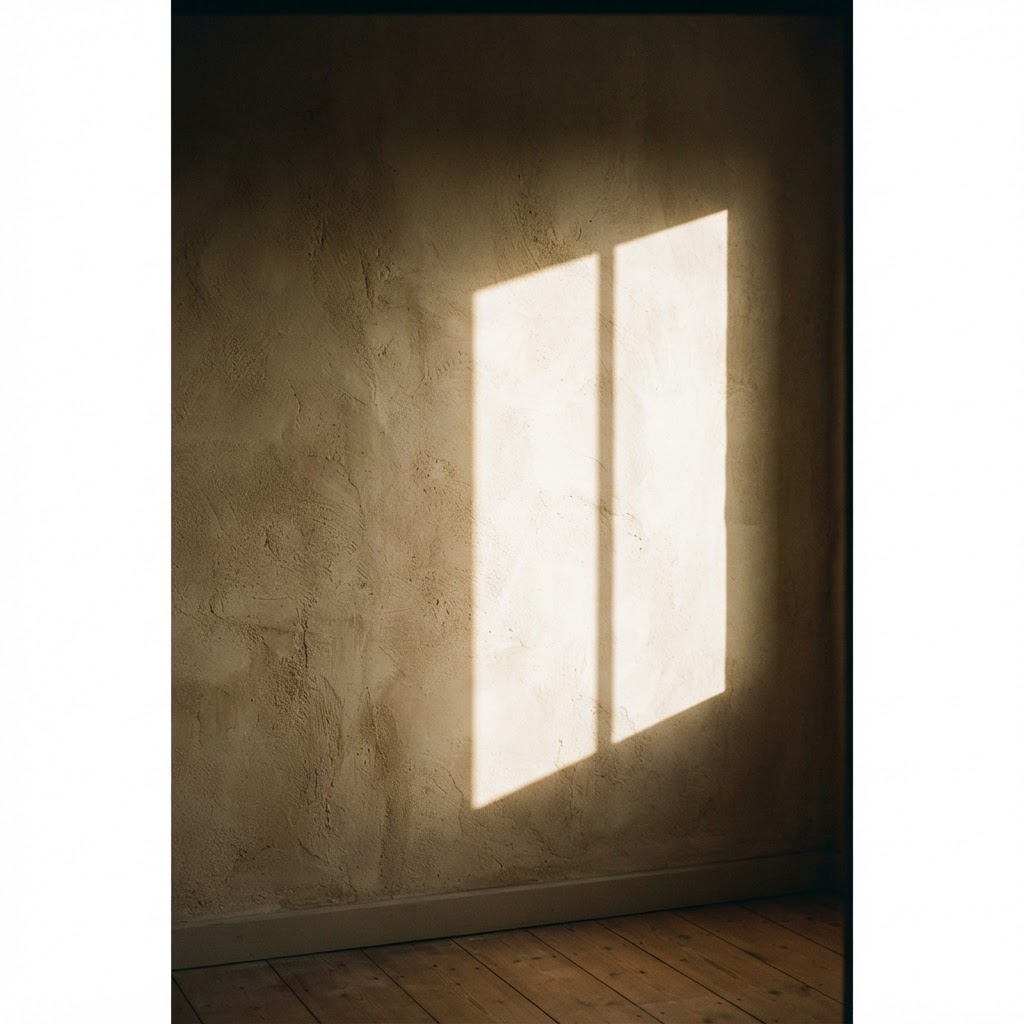
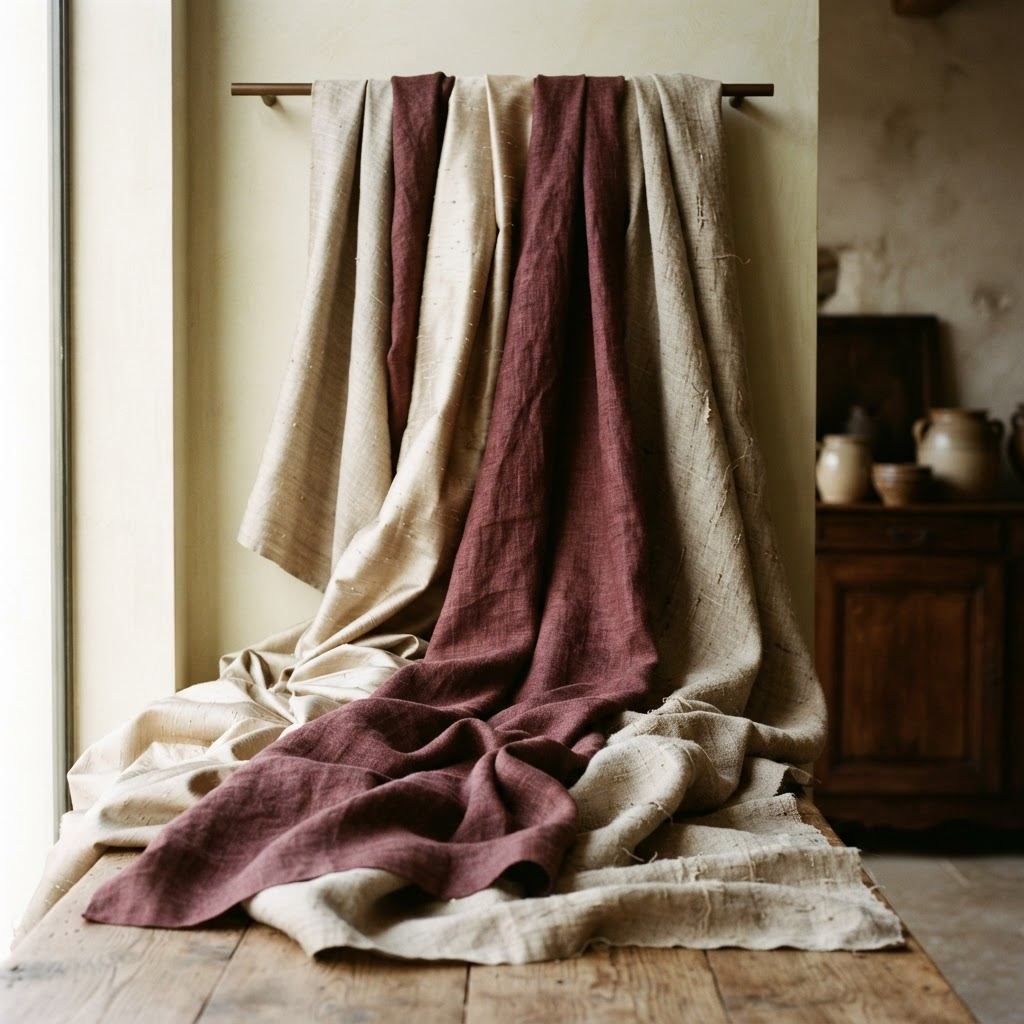
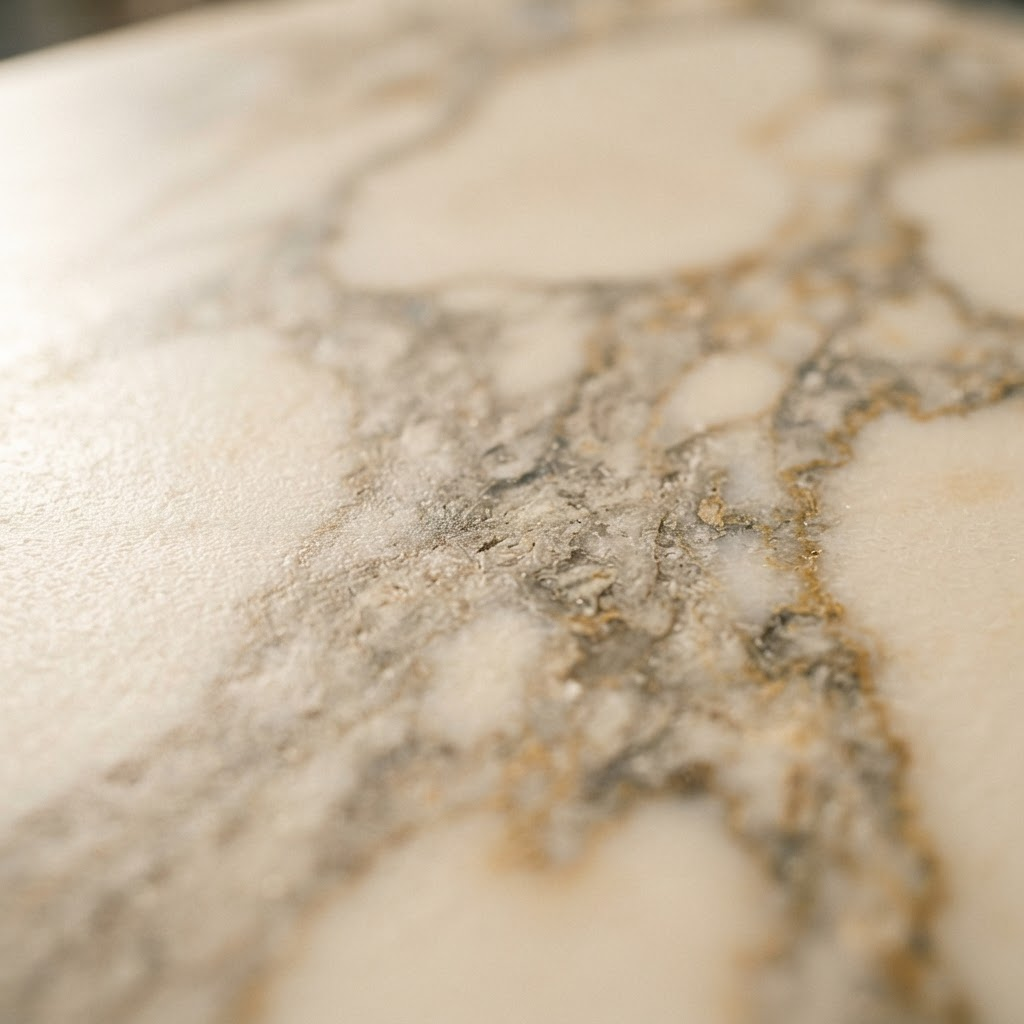
Araish, polished with coconut
The traditional araish finish is burnished with a coconut husk until it takes a low sheen. Four rooms took nine weeks.
Eleven screens, one pattern book
A single surviving screen provided the geometry for all eleven replacements, each carved over four to seven weeks.
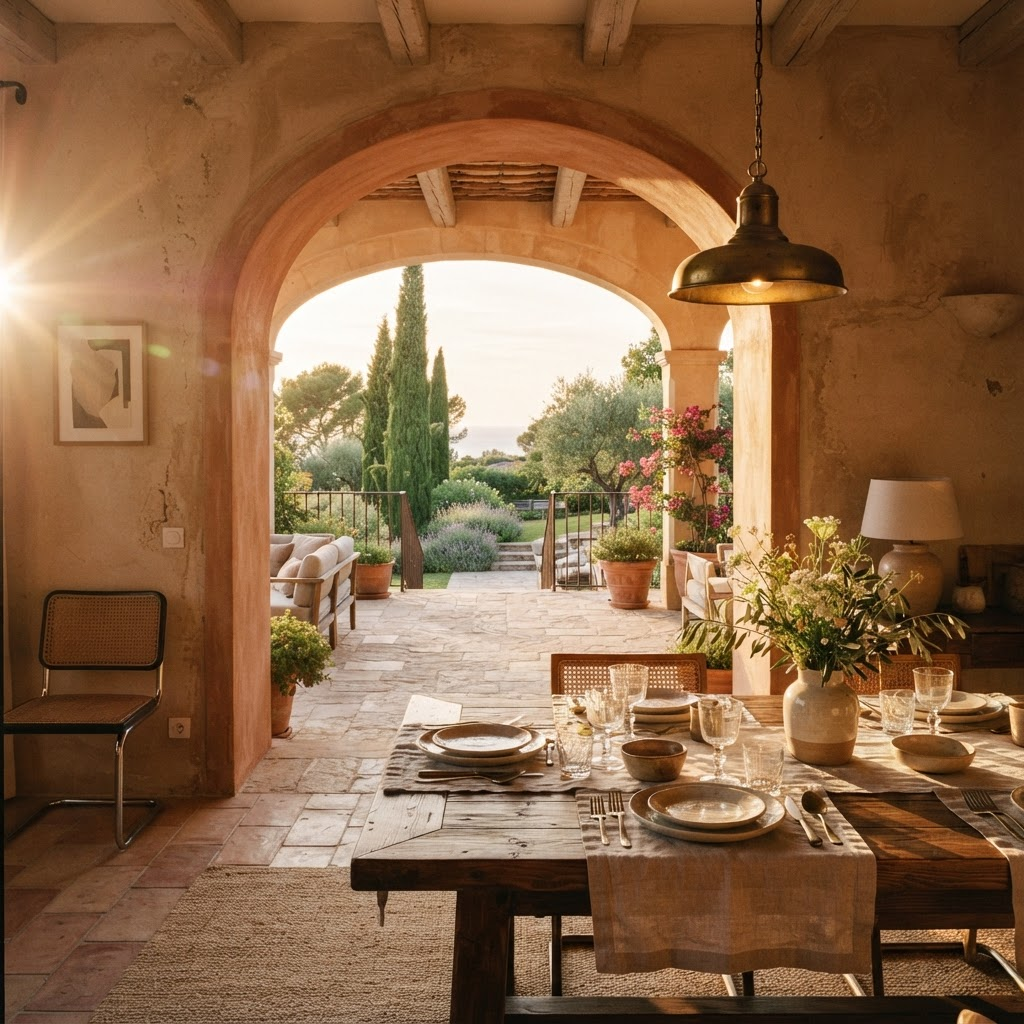
Colour, finally agreed
The saffron of the principal salon took four months and thirty-one samples. It was worth every one of them.
“They treated our family’s mistakes with the same care as our family’s triumphs. That is a rare kind of respect.”
- Interior Architecture
- Nesva Studio
- Stone Carving
- Shilpgram Karigars
- Araish
- Ustad Rafiq & Sons
- Photography
- Ishaan Rao
Next Project
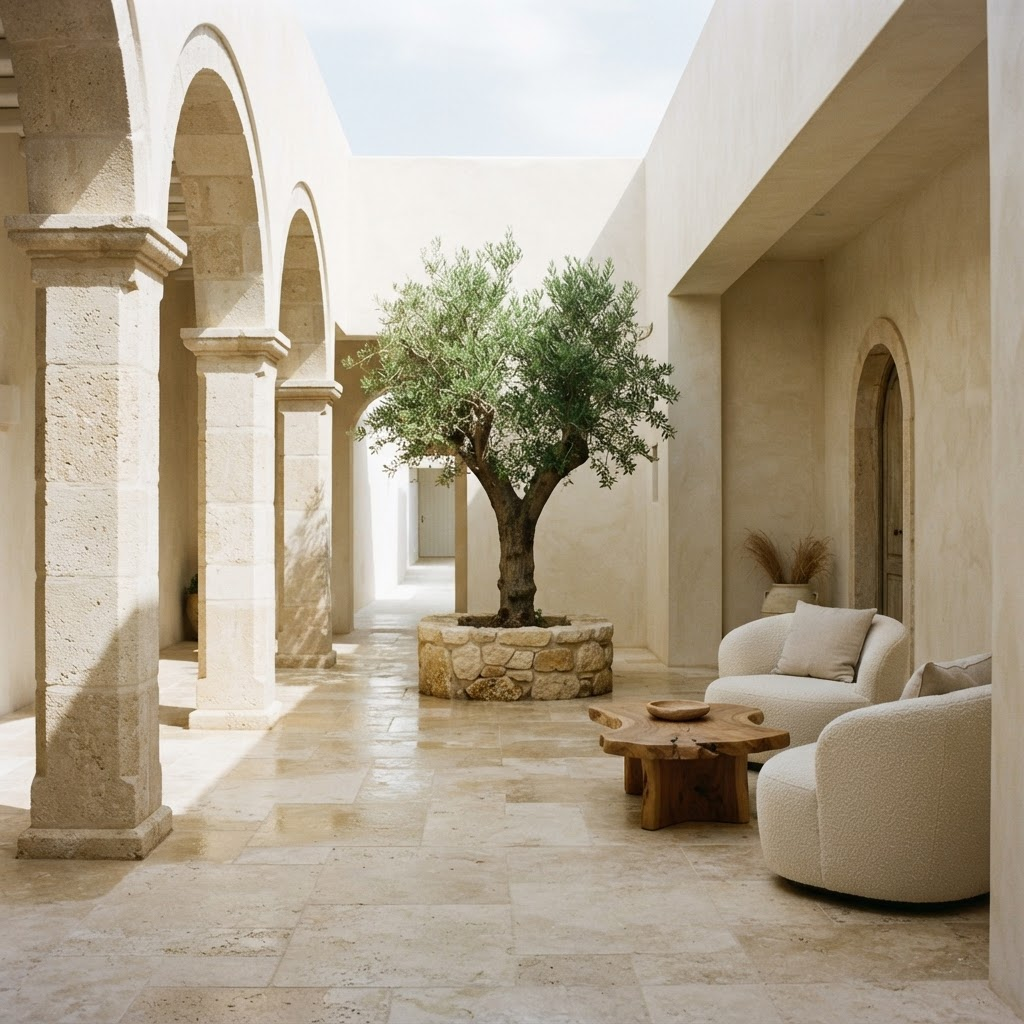
The Ivory Courtyard
Gurugram · 2025
Begin
Let us compose a spacethat belongs only to you.
- Telephone
- +91 9999512096
- Studios
- India
- Availability
- Commissions worldwide
All enquiries are handled in confidence. A significant portion of our work is never published; where discretion is required, we operate under private terms and no imagery leaves the studio.